Buying Stretch Film: Why Price per Kg Is Not Enough
Stretch film is priced per kilo but used per pallet; how far it stretches decides how many pallets a kilo wraps. What to ask in bulk, and how to compare quotes.
By Milad Yadollahi, Production line specialist
Stretch film is sold by the kilo but not consumed by the kilo; it is consumed by the pallet. Because the film is made to be stretched, how far it stretches decides how many pallets a kilo wraps. So two rolls at the same per-kilo price can have completely different costs per pallet.
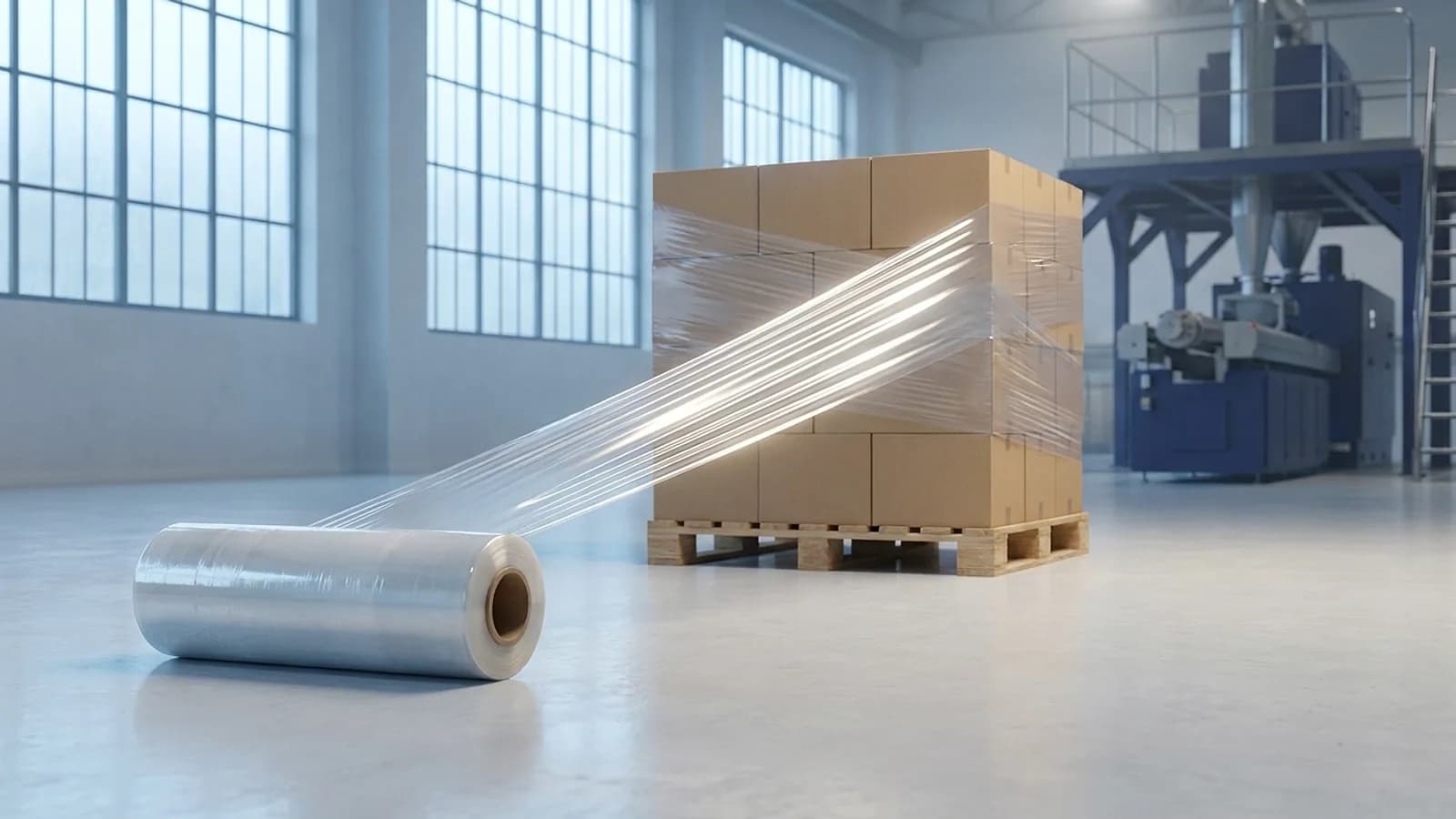
Stretch film is the only packaging film that is supposed to change shape in use. Every other film stays the size you bought it; stretch film is pulled, and the pull is what does the work. For a buyer that means the link between the weight you pay for and the job you get done is less direct in stretch film than in any other film.
Why the per-kilo price means less for stretch film than for anything else
Suppose two suppliers quote nearly the same price per kilo. If one film stretches further, that same kilo goes around more pallets. The number that is actually your cost is the cost per pallet, and it comes from three things: the per-kilo price, the film thickness, and how far the film stretches before it tears.
| Factor | What it decides | How to ask |
|---|---|---|
| Stretch | How many pallets a kilo wraps | Ask what percentage the film stretches, and get that figure from both suppliers |
| Thickness (microns) | The weight of each metre of film | Get the thickness in microns, not in «thin» and «thick» |
| Hand roll or machine roll | How it is applied and how much stretch you actually get | Say whether you wrap by hand or with a pallet wrapper |
| Roll width | How many turns each pallet needs | Give your load height so the right width can be proposed |
| Cling | Whether the layers stay on each other | Stretch film works on its own cling, not on added adhesive |
All of this comes down to one simple calculation that few buyers make: how many pallets one roll wraps. If you have that number for two quotes, the comparison is over in one line.
Hand roll or machine roll?
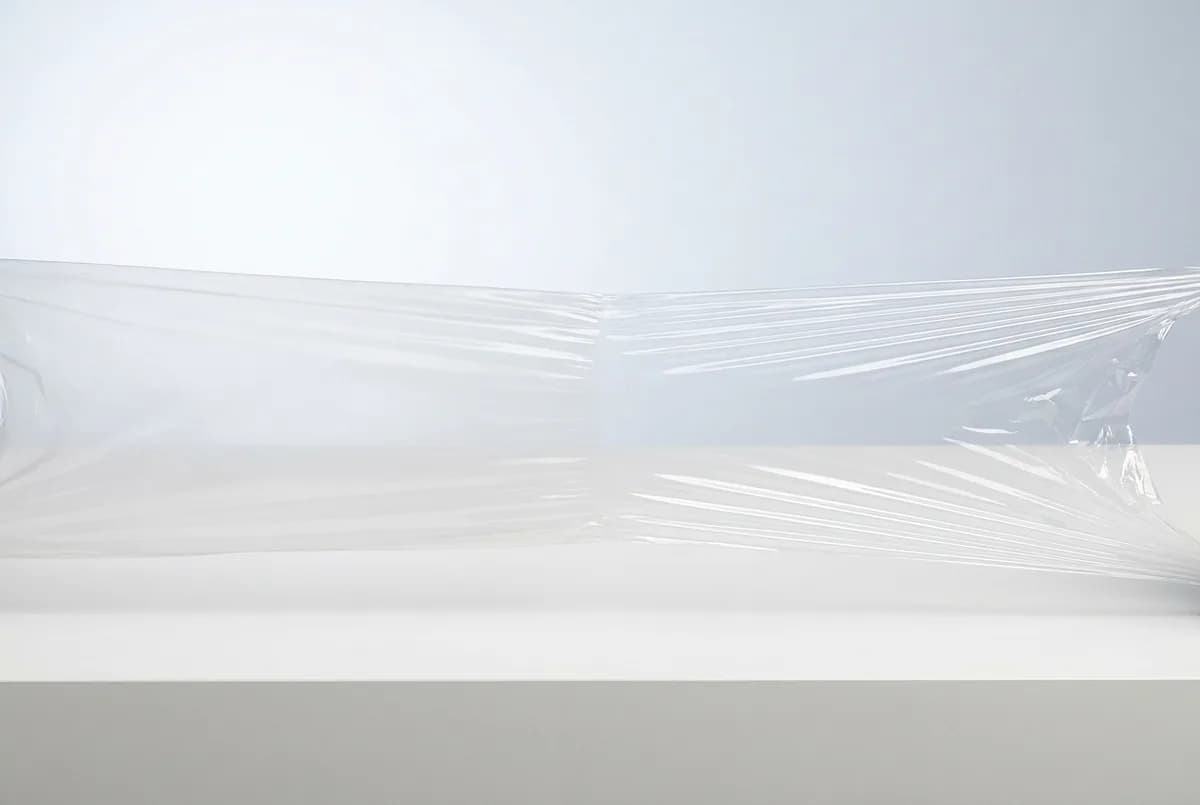
This choice comes before price, because they are two different products, not two packagings of one. A hand roll is for the workshop and smaller volumes, where the operator walks around the pallet. A machine roll is made for a pallet wrapper, where the machine applies the stretch evenly and further than a hand can. Navid makes both.
The practical point is that machine film cannot be used properly by hand, and the reverse. If you have a machine and buy hand film, part of the stretch you paid for is never released.
Pallet wrappers do not all work the same way either, and the two common types treat the film differently. On a turntable wrapper the pallet spins on a platform and the film carriage moves up and down; this is the most common type. On a rotary-arm wrapper the pallet stays still and an arm circles it, which is chosen for loads that spinning would shift: light loads, tall loads, or goods stacked on the pallet with no outer packaging.
That difference matters to the order because the stretch each machine puts into the film is not the same, and the roll width has to match both the load height and the machine's working height. When you enquire, say whether your machine is a turntable or a rotary arm, or whether the wrapping is by hand; that one sentence prevents buying a roll that does not work on your line.
Buying in bulk: what actually changes
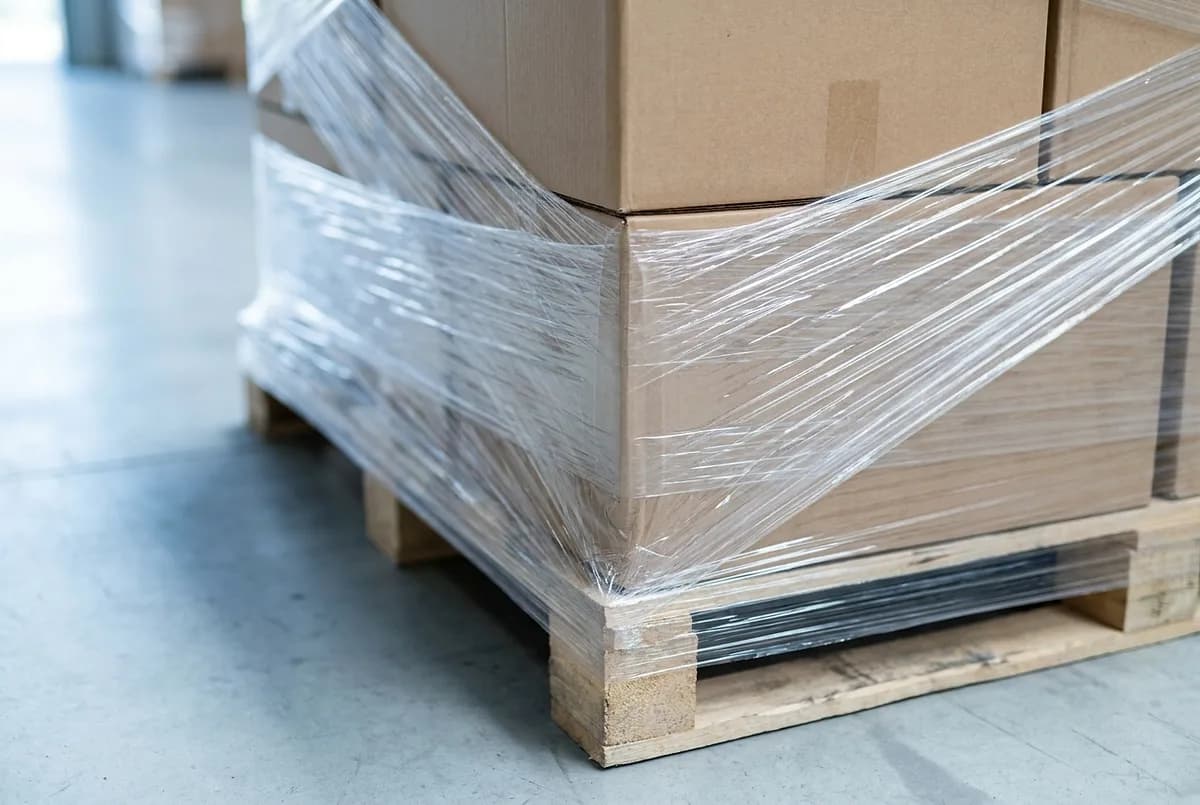
When you buy in bulk, what changes is not only the per-kilo number. What is worth more is that the film is made for your load: a width and thickness that suit your pallet height and load weight, instead of the nearest thing on the shelf. A width that does not match your load height means extra turns or wasted film, and you bought that by the kilo too.
- 1Write down the dimensions and weight of your loaded pallet.
- 2Say whether you wrap by hand or by machine, and if by machine, which model.
- 3Give your current thickness and width, even if they are from a previous supplier.
- 4Estimate your monthly consumption in kilos.
- 5Ask how many pallets one roll wraps, not only how many kilos it weighs.
Send these five and you get the width and thickness that suit your load, and the price for that order.
Get a pallet stretch film quotePallet stretch film is not food cling film
Both are called stretch film and they do different jobs. Pallet stretch film holds a load on a pallet and is made for stretch and strength. Food cling film covers a dish and keeps food for a short time. If you place an order under the general name «stretch», there is room for a mistake; write the use as well.
If you are still not sure whether stretch or shrink is right for your job, the full comparison is in shrink or stretch.
Specifications, roll formats and today's price for pallet stretch film are on the product page.
See pallet stretch filmFrequently asked questions
What is the price of pallet stretch film?
Today's per-kilo price is published on this site's price page, with the date of every change kept. But for stretch film the per-kilo figure alone is not enough: ask how many pallets one roll wraps, so the real cost per pallet is clear.
What is different about buying stretch film in bulk?
The most important difference is that the film can be made for your load, meaning a width and thickness that match your pallet height and load weight, instead of the nearest option in stock.
What is stretch film made of?
LLDPE, linear low-density polyethylene, which is what makes the stretch and the layer-to-layer cling possible. The cling comes from the film itself; no separate adhesive is added.
Should I buy a hand roll or a machine roll?
It depends on how you wrap, not on volume. If you have a pallet wrapper, a machine roll; if an operator walks around the pallet, a hand roll. Machine film does not release its full stretch by hand.
Do you make coloured stretch film?
The standard form is clear, and other colours are made to order. Colour is usually asked for to separate loads or to hide the contents of a pallet.